How to Share the Water: Trout Fishing Etiquette in Montana’s Yellowstone Country
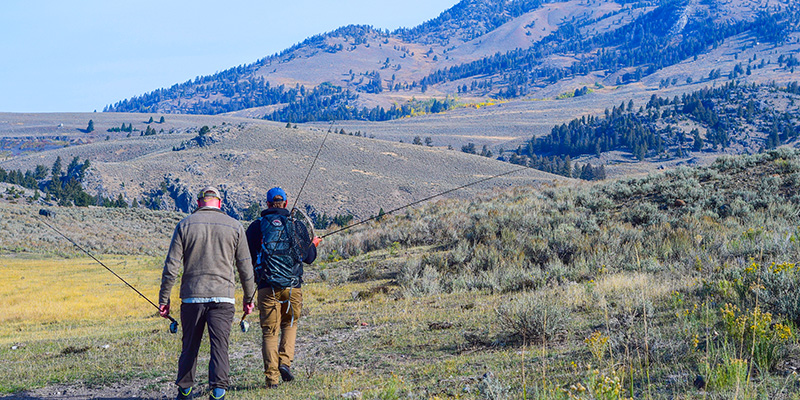 Lamar Valley, Yellowstone National Park, Photo by Jasper Taback
Guest blog by Jasper Taback
The amount and variety of trout water in Yellowstone Country is nothing short of remarkable—and it’s one of the many reasons anglers travel here from all over the world. Between the Madison, Gallatin, Yellowstone, Boulder, and Stillwater rivers, along with the Park’s Lamar River and Soda Butte and Slough creeks, there’s more than enough room for the region’s many fly anglers.
Still, there will be times when you arrive at the hole you were hoping to fish and find another angler already there. At that point, you’re presented with a choice: find a way to share the water respectfully, or risk turning a good day into a frustrating one.
That’s when a little stream etiquette goes a long way.
For many of us, one of the chief draws of fly fishing is the solitude it affords. So when someone wades into the river thirty feet downstream, it understandably ruffles feathers. Our trout rivers are shared resources, but that doesn’t mean it’s a free-for-all.
There’s no hard-and-fast rule for how much room to give another angler on a trout river, but the best way to respect someone’s space is to put yourself in their shoes: if the roles were reversed, how would you feel? It’s a simple thought experiment that usually makes the line a little clearer.
Generally, it’s best not to start fishing immediately upstream of someone else. On many walk-and-wade rivers, it’s widely understood that the first angler on a stretch of water will have the first pass upstream. But that doesn’t necessarily mean you have to abandon the area altogether.
Many anglers are reluctant to walk downstream of someone else and start fishing – after all, that water has just been fished. But instead of letting that deter you, think of it as an opportunity to get creative. It’s a time to fish deeper than you usually would, try a bold fly pattern, or cross the river and fish it from the other side.
Even the best anglers usually leave some fish behind when they leave a hole – they just might not be holding in the most obvious spots.
Sharing space with other anglers is just one part of good trout stream etiquette. Equally important – if not more – is knowing when to give the fish a break. Trout populations are finite, and when they’re subjected to too much pressure, both the fish and the fishing suffer.
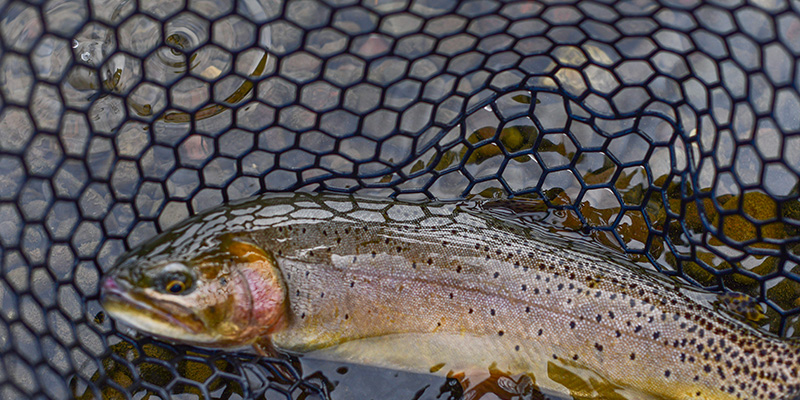 Yellowstone River, Photo by Jasper Taback
One of the simplest ways to protect a river’s trout population is to leave them alone during the times when they’re most vulnerable, such as warm weather spells. As water temperatures climb, trout are already working harder just to survive, and the added stress of being hooked and played can push them past their limits. Once temperatures begin approaching 68 degrees, it’s best to give the fish a rest—a decision made much easier by keeping a thermometer clipped to your fishing pack.
At times, that decision will be taken out of your hands. During the summer months, some rivers in Yellowstone Country fall under hoot-owl restrictions, with fishing closed after 2 p.m. It’s always a bummer when a river is closed, but it’s important to keep the big picture in mind. The closures aren’t about limiting opportunity, but protecting the fishery for future seasons and future anglers.
A trout’s spawning season is another time when angler discretion matters. When trout are reproducing, it’s best to leave them undisturbed by steering clear of redds—the lighter-colored, oval patches in the streambed that the females have created to lay their eggs. A single misplaced step from a wading boot can destroy hundreds, or even thousands, of developing trout.
Inside Yellowstone National Park, many tributaries are seasonally closed to protect spawning trout – particularly native cutthroat populations. But outside the Park, most rivers remain open, making it especially important for anglers to recognize redds and give spawning fish the space they need.
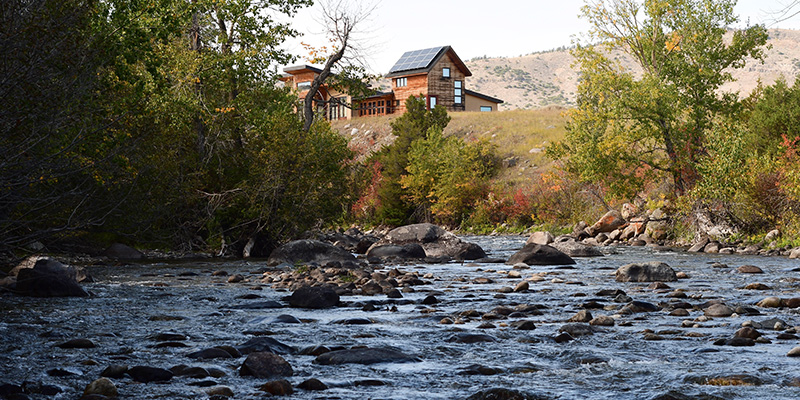 Boulder River, photo by Jasper Taback
These are just a couple components of trout stream etiquette, the rest of which can be picked up the same way fly fishing itself is – through time spent on the water.
If you’re unsure of something, the best option is often to ask. A quick “Do you mind if I put a few casts in upstream?” can prevent most misunderstandings between anglers – and, more often than not, the answer will be yes.
We’re lucky to have a tremendous amount of trout water to work with, and sharing it effectively doesn’t take much more than a willingness to be flexible. Sometimes, that might mean shifting to plan B and exploring new water.
More often than you’d expect, those detours turn into a day of great fishing.
It’s all part of the experience.