Dark Skies in Montana's Yellowstone Country
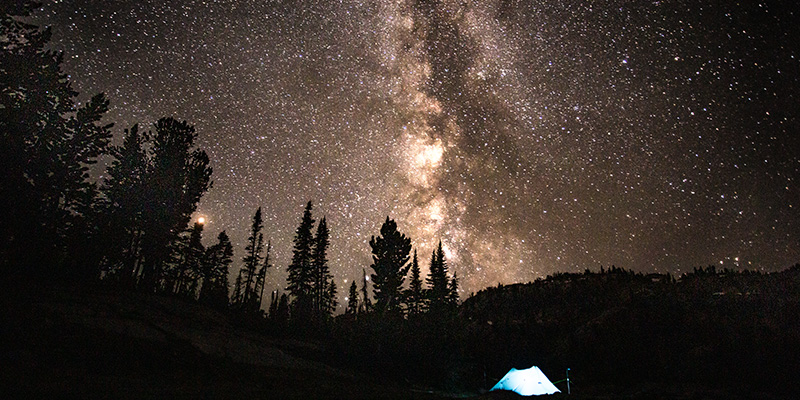 Absaroka-Beartooth Wilderness, Photo by Seth Royal Kroft
Next week begins International Dark Sky Week, a global celebration of the night.
Our ecosystem relies on the natural cycles of light and dark, from migratory birds and pollinators to mammals, including us humans. While artificial light at night is increasing with population growth, here in Montana’s Yellowstone Country, we are fortunate to have access to dark skies across the region. Montana is known for its low population density (less light pollution), coupled with vast acres of public land and high-altitude viewing points.
Yellowstone National Park, like all our national parks, is a harbor of dark skies. It doesn’t take long to get away from the hotels and lodges and find a secluded spot — be sure to watch for wildlife and always carry bear spray! For optimal viewing, arrange your trip around the new moon when the stars really put on a show.
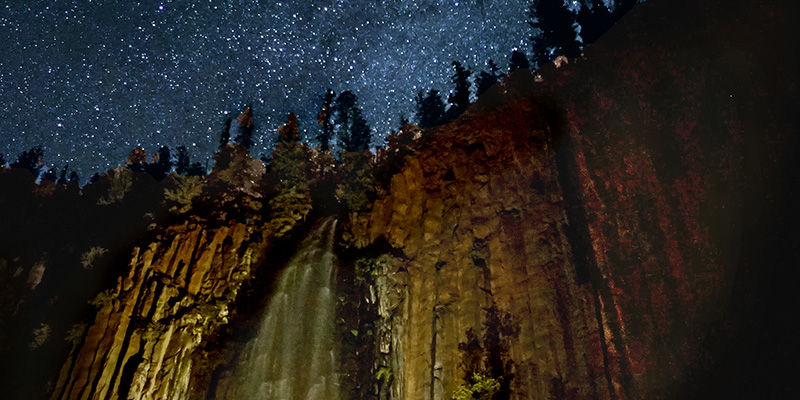 Palisade Falls, Photo by Enchanted Forest
Other night sky activities to note include the Perseid Meteor Shower Aug. 12-13, with up to 80 meteors per hour expected, and the Geminid Meteor Shower Dec. 13-14, with over 70 meteors per hour. The Northern Lights are most likely visible from late September through March. (Stargazing apps are also available on both the App Store and Google Play.)
For those who prefer to share the experience with others and learn from them, the Whistler Observatory in Red Lodge’s Van Dyke Park is free and open to the public every Friday night beginning at dusk. The observatory has a roll-off roof and a variety of on-site telescopes for visitors to use.
Remember, Montana is a large state with many remote areas (perfect for stargazing). Be sure to pack layers, snacks and water, along with a flashlight or headlamp. If possible, a red light is best for preserving your night vision, and avoid looking at your phone screen, or you’ll have to wait for your eyes to readjust!
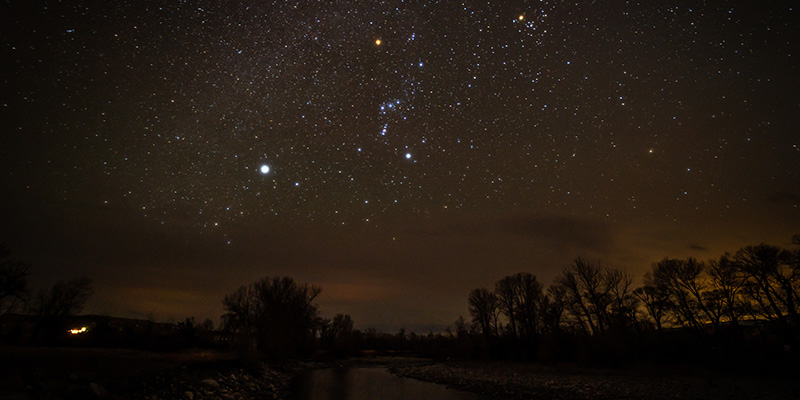 Red Lodge, Photo by Melynda Harrison
While at home, there are five principles for responsible outdoor lighting; things you can do to be a good neighbor and minimize our effects on the ecosystem.
- Ensure outdoor lighting is only used when needed.
- If outdoor lighting is needed, be sure it is targeted, only falling where needed.
- Keep it at a low level. Don’t use brighter bulbs than necessary.
- Controlled lighting, whether by a timer or motion sensor, is ideal.
- Use warm-colored bulbs, and limit blue-violet-colored lighting.
You can learn more about where to find dark skies on our blog. If you’re visiting, I hope you find some time and space to enjoy these quiet and incredible views.
Enjoy the night skies!