Cooling Off in Montana's Yellowstone Country
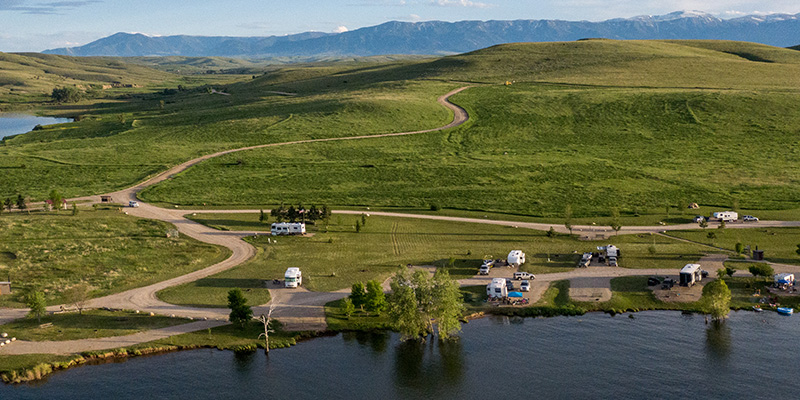 Cooney Reservoir State Park
We’re in the thick of summer days — corn on the cob dripping with butter, juicy watermelon and cold prosecco. Campfires, s’mores, fishing rods, lounging in the sun, and of course, cooling off at the lake. We’re fortunate here in Montana’s Yellowstone Country, with big bodies of water surrounded by stunning backdrops and plenty of recreation.
Fishing at Cooney Reservoir
Cooney Reservoir State Park, near Columbus, is one of the busiest for water sports. It’s on the eastern edge of the region, which tends to be a little warmer, but it’s also known to be a fantastic fishing lake for both walleye and rainbow trout. Docks are out from May through November, but people ice fish throughout the winter. There are five campgrounds with a total of 82 campsites, some of which are ADA accessible. Water is available from May 15-Sept. 27.
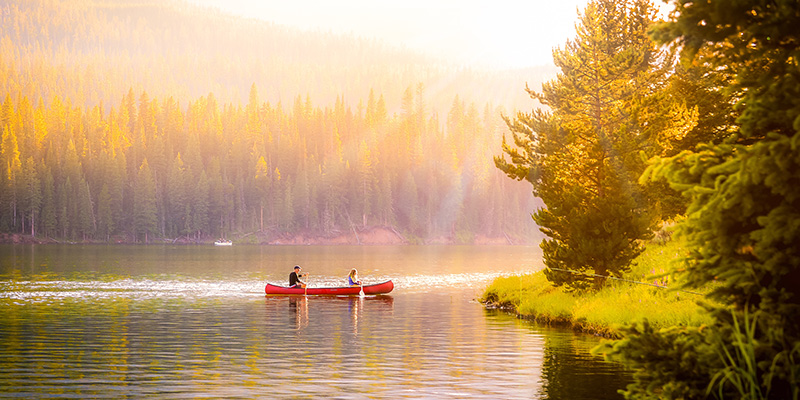 Hyalite Reservoir, Bozeman, Montana
Camping at Hyalite Recreation Area
In Bozeman, Hyalite Recreation Area is home to Hyalite Reservoir, a very popular recreation area in Montana. It’s no wonder — the no-wake lake allows only non-motorized watercraft, which keeps it quiet and peaceful. There are campsites around the lake (reserve them early!) and a covered pavilion for group events. Two of my favorite hikes, Blackmore Peak and Hyalite Peak, are accessible from here. They are long day hikes, leading to incredible vistas. For those seeking shorter, more accessible hikes, Palisade Falls and Grotto Falls are both beautiful, and Palisade is paved, making it accessible for strollers and wheelchairs. Rock climbing, horseback riding, mountain biking and UTV riding can all be enjoyed in the area.
Scenic Boat Rides on Yellowstone Lake
Yellowstone Lake in Yellowstone National Park is the largest high-elevation lake in North America, spanning 20 miles in length and 14 miles in width. It’s a significant body of water, great for fishing and wildlife watching — you can even take a scenic boat cruise. The lake is too cold for swimming (averaging 41 degrees), but deep within, scientists have found underwater geysers, hot springs, and fumaroles at West Thumb and Mary and Sedge Bays. The hottest spot in the lake was found at Mary Bay, where the temperature was recorded at 252°F (122°C).
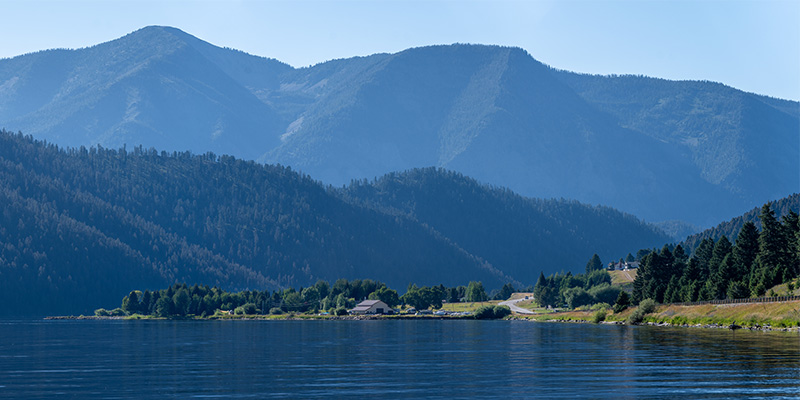 Hebgen Lake, West Yellowstone, Montana
Watersports at Hebgen Lake
Hebgen Lake, near West Yellowstone, is my family’s favorite. The 12,563-acre reservoir is excellent for fishing, sailing, and watersports. It’s known as one of the best dry fly lakes in the West, and I am not too proud to tell you, I’ve fished it for years and have yet to land one of those crafty fish on a fly rod. There are several private and public campgrounds around the lake, all offering stunning views. Winds do tend to come up in the afternoon, so be careful if you’re out on the water. You’ll also need to keep an eye on the algae blooms that occur in late summer.
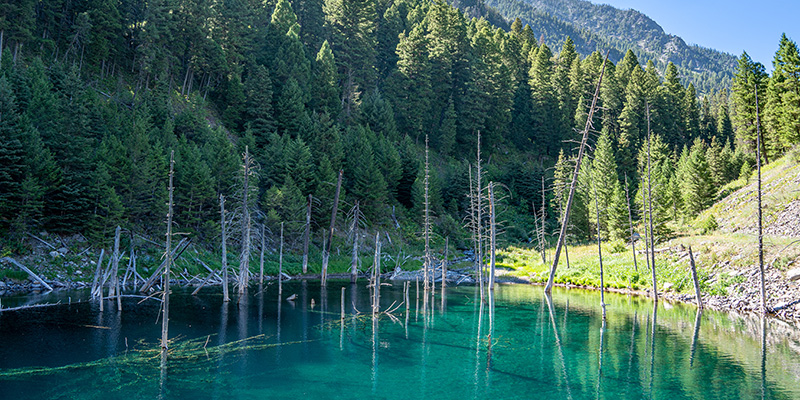 Earthquake Lake, Montana
Exploring Earthquake Lake
While there, it’s worth a short jaunt up the road to Earthquake Lake and Visitor Center. The lake was formed by a massive landslide triggered by the Hebgen Lake Earthquake in 1959. The quake registered 7.5 on the Richter Scale, sending 80 million tons of rock that broke away from Sheep Mountain into the Madison River, blocking its flow, causing much destruction and the loss of lives. Curious visitors can learn from the visitor center’s interpretive displays about geological activity in Yellowstone Country and check out a working seismograph.
Do Your Part!
We would be remiss not to remind you that if you are bringing your boat, you’ll need to stop at all watercraft checkpoints. Montana does a fantastic job of keeping Aquatic Invasive Species (AIS) at bay, and it’s up to everyone to do their part to keep our waters clean and free of AIS!
Happy camping!